

By Emma Nelson
Infrastructure Moves Forward
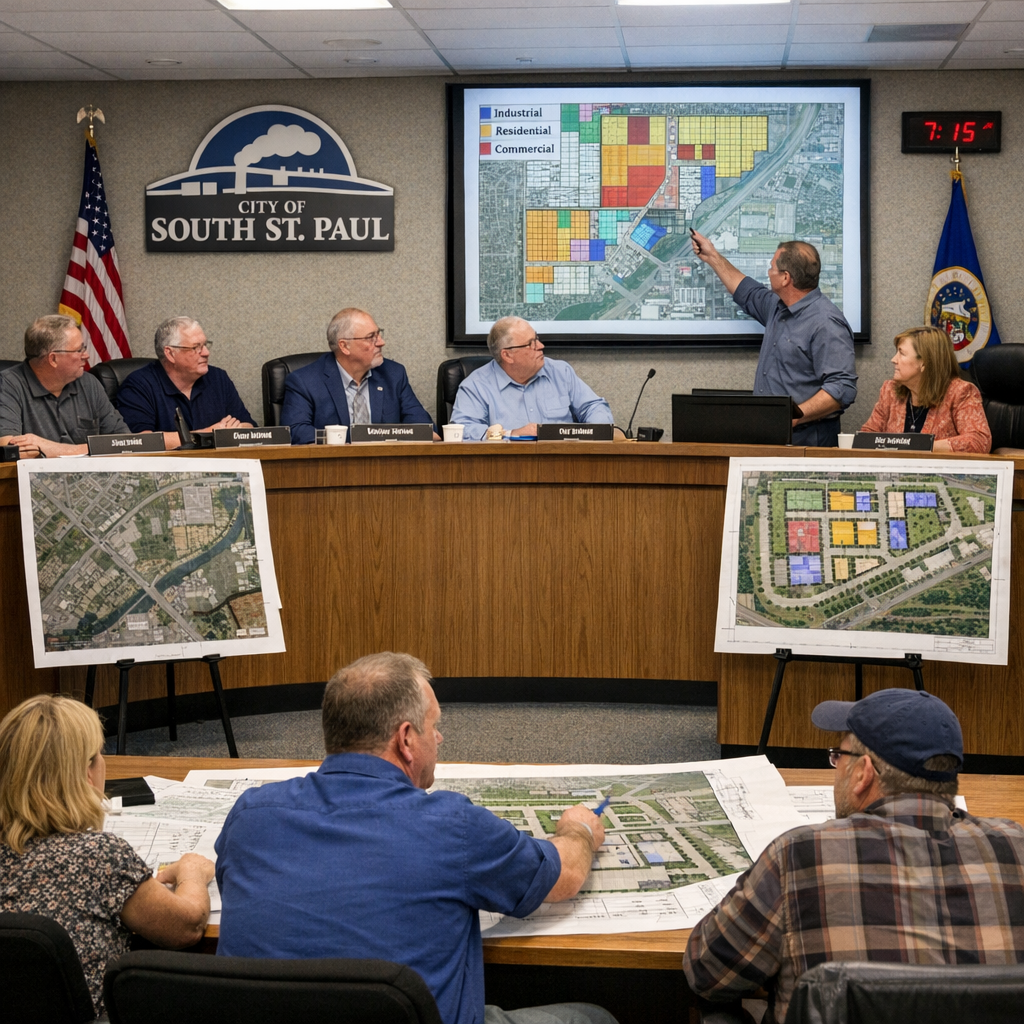
Last metro council meeting, City Council approved a design contract for the new Well No. 3 water treatment plant, and also issued a change order in the ongoing lead service line replacement project—two efforts aimed at improving water quality citywide. The Hardman Triangle redevelopment also took a key step: the city authorized a lease to acquire property at 130-134 Hardman Avenue North, positioning the area for future mixed-use development.
Capital Improvement Plan Brings Major Investments
This year’s approved Capital Improvement Plan slices out over $50 million for local projects, including $2.7 million toward the second phase of Marie Avenue reconstruction, $20.2 million earmarked to remove lead service lines, and more than $10 million to design and build a new central maintenance facility. Repair work has also been allocated for the American Legion library building.
Zoning, Governance, and Policy Updates
Ordinance 1444, updating the zoning rules in the R-2 single- and two-family residential district, was adopted to reflect changing housing needs. In a related legislative move, the council passed an amendment to the lawful gambling ordinance, showing their attention to business regulation in residential and commercial zones alike.
Odor Concerns and Resident Health
The Sanimax odor management plan was discussed in a recent council session, though without formal action. This ongoing issue continues to draw attention in neighborhoods downwind of the facility, as residents raise health and livability concerns tied to air quality and odor from industrial operations.
What to Keep an Eye On
- The rollout of the ADA Transition Plan, which aims to improve accessibility in sidewalks, crossings, parks, and public buildings across South St. Paul.
- Completion of the Marie Avenue reconstruction phases—timing, impacts to traffic, and pedestrian access.
- Progress on the central maintenance facility: where it will sit, how it will be funded, and how it will serve city operations.
- Community input on development proposals, especially in sensitive zones, commercial corridors, and redevelopment sites like Hardman Triangle.
These steps reflect a city in motion—making choices that affect infrastructure, equity, public health, and growth. It’s a time for residents to stay informed and engaged.