

By Olivia Johnson
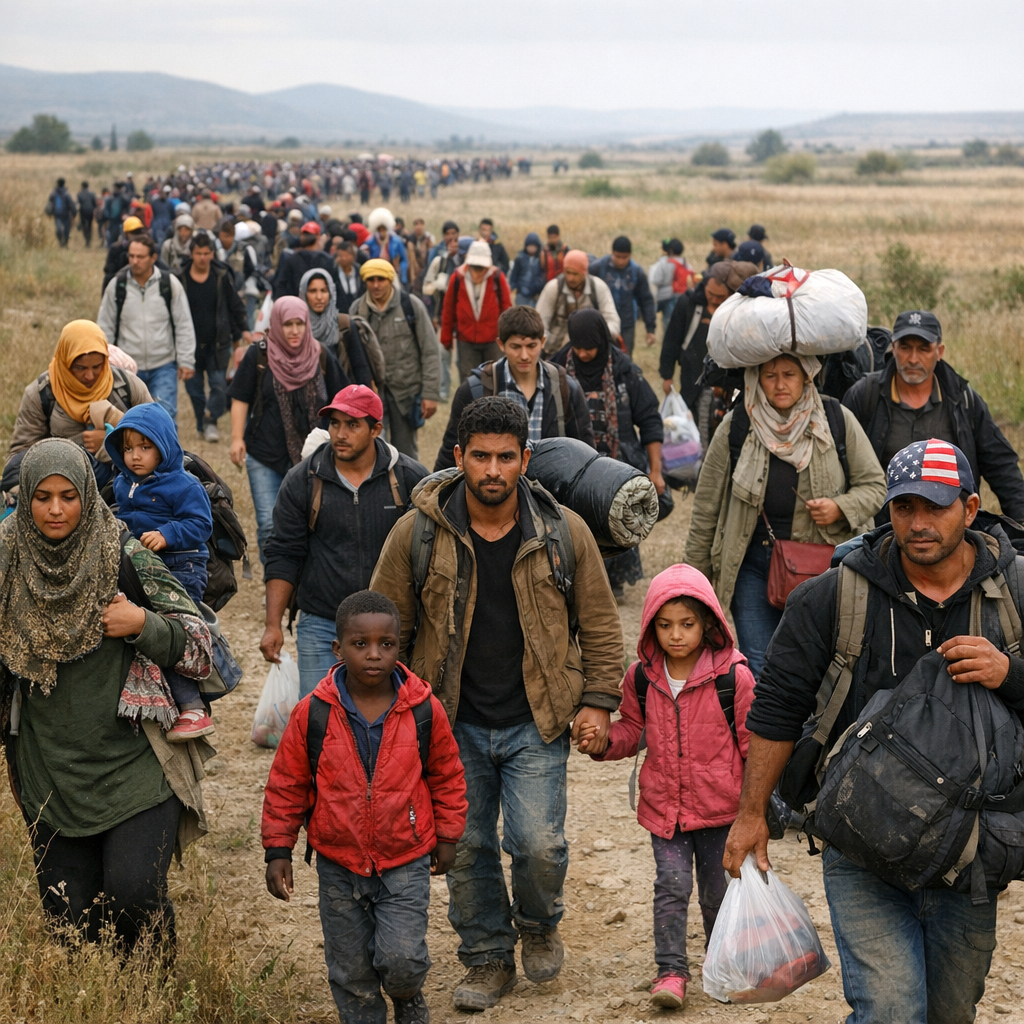
In a time of rapid change, two defining challenges stand out globally: the migration of people driven by conflict, opportunity, and climate—and the escalating urgency of climate action. These forces are reshaping societies far from home—like ours in South St Paul—and across all corners of the globe.
Global Migration: Numbers, Drivers, and Patterns
Recent data estimates that by mid-2024 there were about 304 million people living as international migrants—roughly 3.7% of the world’s population. At the same time, more than 83 million people were internally displaced within their countries due to violence, natural disasters, and political instability. Most cross-border migration is driven by work, family reunification, or education rather than by asylum or refuge. In many cases, migrants send remittances home, forming lifelines for communities across borders. (International Organization for Migration)
Migration Trends We’re Seeing
- South-South Movement: A large share of migration is between developing countries—driven largely by economic opportunities or climatic shifts. People often move within their region rather than to distant nations.
- Transit Risks and Policy Gaps: Those who travel through multiple countries face hurdles including unsafe crossings, limited legal protections, and fragmented reception systems.
- Integration Challenges: Host communities—both wealthy and low-resource—are working to address social, political, and economic pressures that come with new arrivals.
Climate Action: What the Latest Science Urges
Scientific reports make clear that the Earth’s climate system is now under strain in ways not seen in centuries. Greenhouse gases—especially carbon dioxide and methane—are at record levels. Temperatures, sea levels, ice sheets, and ocean heat content are all rising. Scientists warn that exceeding thresholds like 1.5 °C above pre-industrial averages could trigger irreversible effects, especially for ecosystems and vulnerable human settlements. (United Nations, WMO, UNEP reports)
Where Efforts Are Focused—and Where Gaps Remain
- Emissions Reduction: Countries continue submitting climate pledges, but current policies are projected to fall short of keeping warming below the most dangerous thresholds.
- Adaptation & Resilience: Building infrastructure and strategies to deal with heatwaves, droughts, rising seas, and disasters is increasing—but especially underserved in poorer nations.
- Finance and Equity: Lack of funding remains one of the biggest obstacles, particularly for communities that contributed least to the crisis but face its harshest effects.
Why This Matters to Us in South St Paul
Even though we live far from many of the world’s border crossings or coastal flood zones, global migration and climate change touch us here. Locally, we see how immigration enriches our fabric—through new businesses, cultural diversity, and community leadership. Climate-driven supply chain disruptions and extreme weather abroad can ripple into food prices, energy bills, and economic stability at home.
Moving Forward: Global and Local Paths
Here are key approaches that matter at all scales:
- Policy with Purpose: Governments need migration policies that protect human rights, promote safe routes, welcome newcomers, and support integration.
- Inclusive Climate Planning: Ensure climate action funds reach those most vulnerable—including low-income countries, marginalized communities, and youth.
- Community Engagement: Local voices—from migrants, elders, organizers—must be part of both climate and migration policy discussions.
- Education & Communication: Global literacy about climate science and migration realities helps build support for meaningful action.
Global migration and climate change aren’t separate challenges—they’re interconnected. Working on one without the other leaves gaps. But together, they offer opportunities: for more resilient communities, more inclusive societies, and a more stable future. As we consider our role here in South St Paul, both awareness and action can help.